Research Interests
- Psychoactive drugs
- Drug misuse and substance use disorder (SUD)
- Drug harm reduction
- Plasticity
- Motivation
- Cognition
- Neuroscience
Research Description
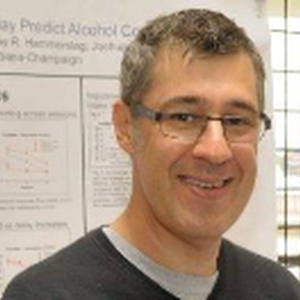
Dr. Gulley's laboratory studies the neurobiological and behavioral consequences of repeated exposure to psychoactive drugs such as alcohol, THC (cannabis), and the amphetamines. In addition, they investigate motivation, cognitive behavior and brain circuitry in drug naïve individuals, especially in rodent models of adolescence. Examples of current research questions addressed by the lab include:
- Do functional immaturities in the adolescent brain explain age differences in motivation and cognitive behavior that contribute to a heightened vulnerability to use and/or misuse drugs?
- Are adolescents, compared to adults, more sensitive to drug-induced changes in neural function and behavior?
- Are there more adverse consequences when drug exposure occurs early in life?
In the lab, Dr. Gulley and his students use behavioral and physiological methods of analysis, both alone and in combination. For behavior, they study drug responses using operant drug self-administration, drug discrimination, and behavioral sensitization techniques. They also use operant food-reinforced responding to assess cognitive behaviors, including impulsivity, behavioral flexibility, attention, and working memory, as well as maze-based behavioral assessments (e.g., elevated plus maze; T-maze). Physiological measure include in vivo multiple neuron electrophysiology, which allows for the recording of the activity of a large number of brain cells as animals are actively behaving, in vitro brain slice electrophysiology, immunohistochemistry, gel electrophoresis, and immunoblotting techniques.
Education
- Ph.D. from Indiana University
- B.S. from the University of Iowa
Grants
- Neural mechanisms of sex differences in vulnerability to the effects of adolescent
methamphetamine exposure (R21 DA055105)
Additional Campus Affiliations
Affiliate, Carl R. Woese Institute for Genomic Biology
Professor, Neuroscience Program
Recent Publications
Carrica, L. K., & Gulley, J. M. (2024). The role of sex and drug use during adolescence in determining the risk for adverse consequences of amphetamines. In Advances in Pharmacology (Vol. 99, pp. 125-144). (Advances in Pharmacology). Academic Press Inc.. https://doi.org/10.1016/bs.apha.2023.09.002
Shi, L., Kang, S., Choi, C. Y., Noonan, B. L., Carrica, L. K., Liang, N. C., & Gulley, J. M. (2024). Effects of combined exposure to ethanol and delta-9-tetrahydrocannabinol during adolescence on synaptic plasticity in the prefrontal cortex of Long Evans rats. Neuropharmacology, 242, Article 109765. https://doi.org/10.1016/j.neuropharm.2023.109765
Carrica, L. K., Choi, C. Y., Walter, F. A., Noonan, B. L., Shi, L., Johnson, C. T., Bradshaw, H. B., Liang, N. C., & Gulley, J. M. (2023). Effects of combined use of alcohol and delta-9-tetrahydrocannibinol on working memory in Long Evans rats. Behavioural Brain Research, 449, Article 114475. https://doi.org/10.1016/j.bbr.2023.114475
Belagodu, A., Kang, S., Gulley, J. M., & Galvez, R. (2021). Effects of β-hydroxy-β-methylbutyrate (HMB) supplementation on biomarkers for cognitive function and electrophysiological processes in aging. In Factors Affecting Neurological Aging: Genetics, Neurology, Behavior, and Diet (pp. 627-636). Elsevier. https://doi.org/10.1016/B978-0-12-817990-1.00054-8
Gulley, J. M., & Izenwasser, S. (2021). Adolescent drug addiction. Pharmacology Biochemistry and Behavior, 203, Article 173151. https://doi.org/10.1016/j.pbb.2021.173151